







tel +86-0576-8727 7300
email info@camshaft.cc
Quality Performance Reliability
NewCams logo

Tappets (Lifters / Valve Lifters)

Tappets (also known as Lifters / Valve Lifters) are core transmission components in an engine’s valve train.

They are mainly classified into mechanical tappets and hydraulic tappets.

Core Classification Logic

• By operating principle:

Hydraulic Tappets
Mechanical Tappets / Solid Lifters

• By cam contact surface design:

Flat Tappet
Roller Tappet

• By shape and structure:

Bucket Tappet
Mushroom Tappet
Cylindrical Tappet

Mechanical Tappets / Solid Lifters

Key Features: Solid metal structure with no hydraulic compensation. Valve lash must be adjusted manually at regular intervals. Mainly used in high-performance / racing / vintage engines.

(1) Flat Tappet / Solid Flat Lifter

Structure: Flat or slightly crowned bottom surface with direct sliding friction against the camshaft. Available in bucket, mushroom, and cylindrical types.

Advantages: Simple structure, lightweight, high rigidity, no hydraulic lag.

Disadvantages: Requires periodic lash adjustment, tapping noise during operation, high wear rate.

(2) Roller Tappet / Roller Lifter

Structure: Equipped with a bearing-mounted roller at the bottom, converting sliding friction into rolling friction, greatly reducing wear and power loss.

Advantages: Very low friction, long service life, excellent high-RPM performance; preferred for racing / modified engines.

Disadvantages: Complex structure, high cost, relatively heavy.

Mechanical Tappets Roller lifter Roller lifter

Common Types by Outer Shape

(1) Bucket Tappet / Cup Tappet Structure:

Cup-shaped or bucket cylindrical design, directly matched for overhead camshaft (OHC / DOHC) engines, the most common type for passenger vehicles.

Subtypes: Hydraulic bucket tappet, mechanical bucket tappet (including shim-over-bucket and shim-under-bucket types for manual clearance adjustment).

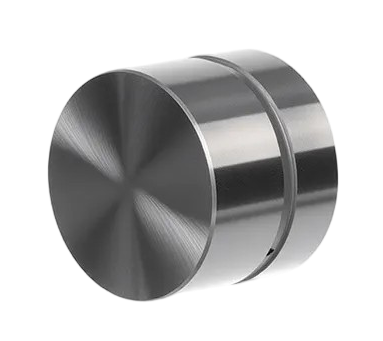
Cup Tappet

(2) Mushroom Tappet Structure:

Mushroom-shaped profile, mostly used in older OHV engines with an adjustment screw on top for valve lash.

Mushroom Tappet

(3) Cylindrical Tappet Structure:

Hollow cylindrical shape for weight reduction, widely applied in medium and large diesel engines / OHV engines, available in flat and roller versions.

Cylindrical Tappet

Core Types Comparison Table

Type Core Principle Clearance Adjustment Running Noise Application Structural Complexity
Hydraulic Tappets Hydraulic automatic compensation Automatic zero lash Very low Mass-produced passenger car engines, daily vehicles High
Mechanical Flat Tappets Solid rigid transmission Manual periodic adjustment Tapping noise Vintage engines, classic cars Very low
Mechanical Roller Tappets Roller-driven transmission Manual periodic adjustment Low Racing, modified cars, high-performance engines High

Additional Notes

Shim Tappet:

A subtype of mechanical bucket tappets. Clearance is adjusted by adding or removing shims on the top or bottom of the tappet. Widely used in older Japanese and European DOHC engines.

Shim Tappet

Rocker Arm Roller Tappet:

Integrates a roller into the rocker arm to replace traditional tappets. Mostly used in large-bore diesel engines and heavy-duty vehicle engines to further reduce friction.

Rocker Arm Roller Tappet
TOP